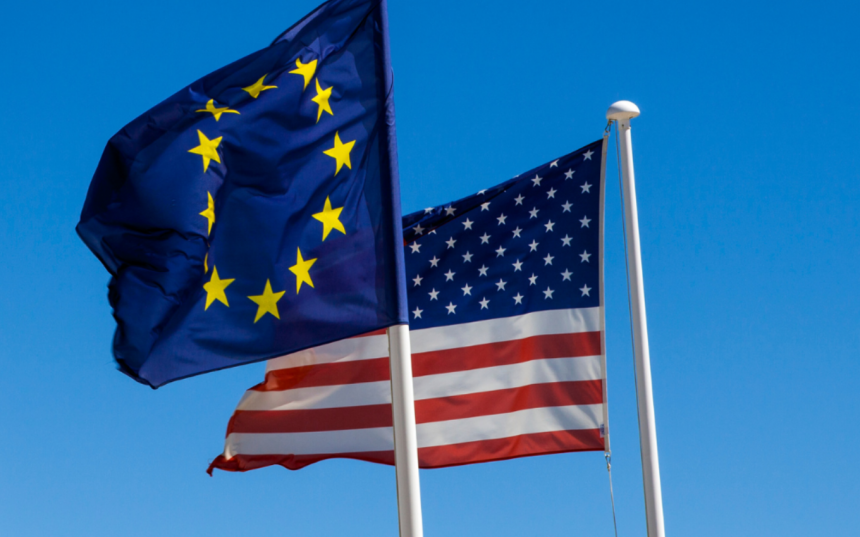
In early 2026, the United States announced a series of increased tariffs on imports from several European countries as part of a broader trade and geopolitical strategy tied to tensions over strategic territories such as Greenland. The new measures include a 10% tariff on goods imported from key European partners, set to take effect on February 1 and potentially rise to 25% by June if no agreement is reached.
The affected countries include Denmark, Norway, Sweden, France, Germany, the United Kingdom, the Netherlands, and Finland — a coalition that represents a significant part of Europe’s industrial and export capacity.
Impact on European Trade
The immediate reaction from European industry was one of concern and criticism. European leaders warned that such tariffs risked destabilizing transatlantic relations and could lead to economic damage if not properly managed. European industry groups called the demands “ludicrous” and politically motivated, emphasizing the dangers of tying trade sanctions to geopolitical objectives.
Moreover, early estimates suggest that such tariffs could sharply reduce exports from certain countries. For example, Swedish exporters could see shipments to the United States drop by up to 28% under sustained tariff levels, especially in sectors such as electronics, machinery, and steel.
Spain’s Exposure to U.S. Tariffs
While Spain’s trade exposure to the U.S. market is lower than that of other major EU economies, it is nevertheless significant. Spain exported goods worth approximately €18 billion to the United States in recent years, and about 5% of Spain’s total exports are directly affected by U.S. tariffs.
Spanish sectors such as machinery, electrical equipment, agricultural products (including olive oil and wine), and components for broader European supply chains are among those most exposed to the new tariff environment.
Analyses by the Spanish Chamber of Commerce suggest U.S. tariffs could lead to a reduction of 10–18% in Spanish exports to the United States, representing billions of euros in lost sales and broader indirect effects on investment and supply chain activity.
How Spain and Europe Are Responding
Rather than escalating into an uncontrolled trade war, European policymakers — including Spain’s government — have pursued a strategy of coordination, mitigation, and measured response.
1. National and EU-Level Response Plans
In response to the tariff threat, Spain unveiled a €14.1 billion Trade Response and Relaunch Plan to protect its economy and help affected businesses adapt. The plan includes new funding lines, financing guarantees, industrial investment support, and temporary credit mechanisms aimed at maintaining competitiveness and preserving jobs.
Spanish Prime Minister Pedro Sánchez emphasized that the plan would be deployed immediately to help companies and workers anticipate and mitigate the effects of the new tariff regime. He also called for stronger coordination within the EU to address shared challenges.
2. Coordinated European Union Strategy
At the EU level, member states have emphasized a unified stance to avoid fragmentation and prevent individual countries from being targeted separately. Diplomatic efforts have focused on trade negotiations, legal challenges within the World Trade Organization (WTO) framework, and discussions on retaliatory measures in case tariffs remain in place.
3. Long-Term Diversification and Market Shifts
European exporters are increasingly seeking to diversify markets beyond the United States, redirecting trade flows to Asia, Africa, and Latin America, and strengthening intra-European supply chains to reduce vulnerability to external shocks.
Balancing Diplomacy and Economic Defense
European leaders have stressed the importance of managing the situation without triggering a full-scale trade war. Public officials have emphasized diplomacy while preparing legal and economic tools that could be deployed if necessary.
The Spanish Economy Minister has also highlighted the need for a fair and balanced trade agreement between the EU and the United States, acknowledging that progress toward such a pact remains challenging but politically desirable.
Outlook and Risks
Economists warn that prolonged tariff pressures can slow economic growth and dampen investment due to rising uncertainty. European forecasts already point to slower GDP expansion partly due to tariff-induced trade disruptions.
The complex interplay between geopolitics and trade policy in 2026 underscores the broader transformation of global commerce, where economic instruments are increasingly leveraged for strategic ends. Europe’s response — characterised by unity, legal strategy, and economic mitigation — reflects a careful attempt to defend its economic interests while maintaining stability in transatlantic relations.